
How to Start a Life Coaching Business Introduction –
Life coaching has become a popular career and business opportunity for people who enjoy helping others achieve their personal and professional goals.
A life coach supports clients by helping them identify challenges, set meaningful goals, develop action plans, and stay accountable.
If you have good communication skills, empathy, and a genuine interest in helping people, starting a life coaching business can be a rewarding option.
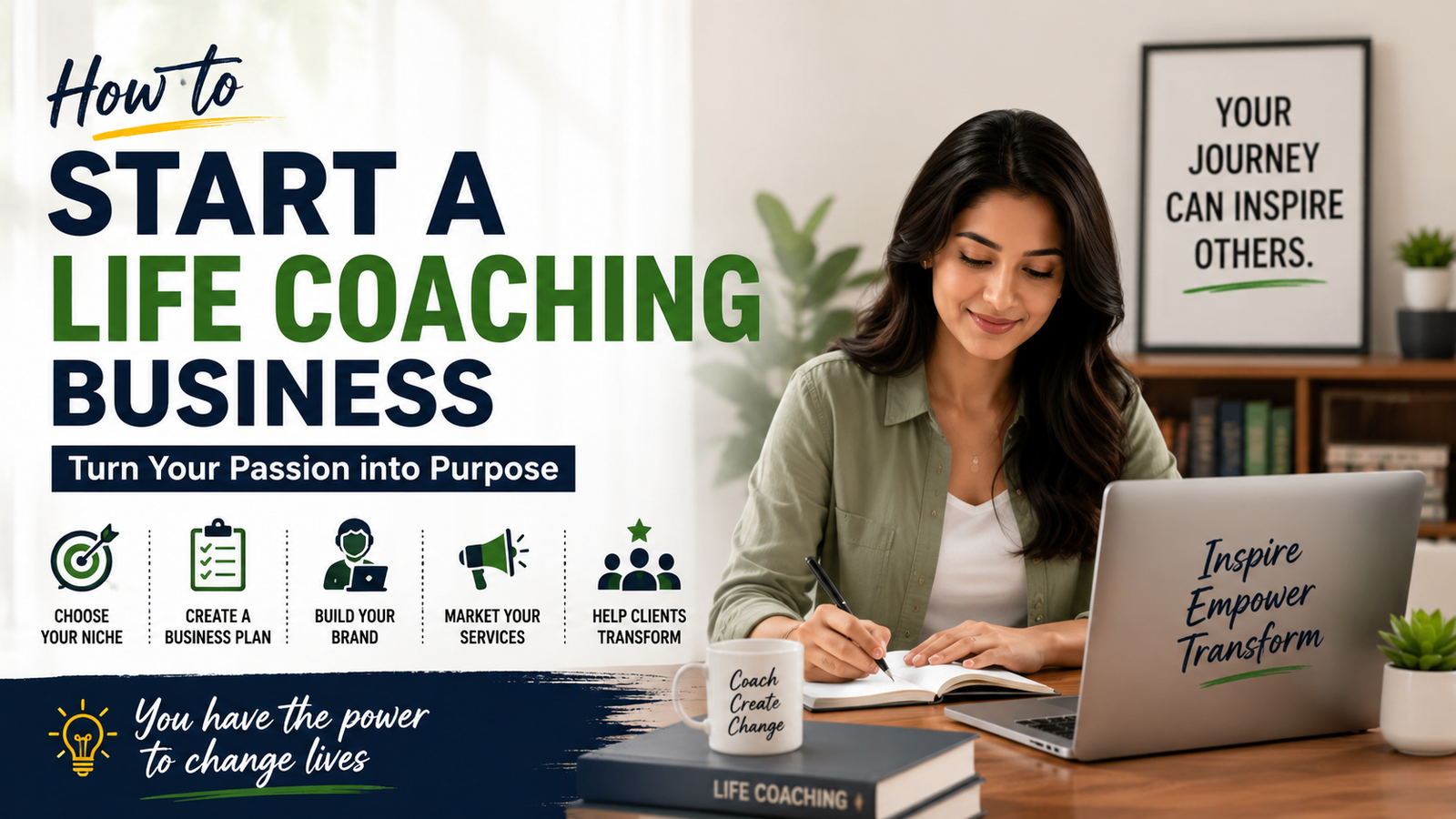
1. Choose Your Coaching Niche
The first step is to decide what type of clients you want to help.
Life coaching is a broad field, so choosing a specific niche can make your business easier to market.
You could focus on career coaching, confidence coaching, relationship coaching, wellness coaching, productivity coaching, student coaching, or personal development.
Choose a niche based on your skills, experience, interests, and the problems you can confidently help clients address.
2. Develop Your Coaching Skills
Good coaching requires more than simply giving advice.
You need strong listening, communication, questioning, goal-setting, and accountability skills.
Consider completing a reputable coaching training or certification program to develop your professional skills and understand coaching ethics and boundaries.

Continuous learning can also help you improve your coaching techniques and provide better experiences for your clients.
3. Define Your Coaching Services
Decide what services you will offer. You can provide one-to-one coaching, group coaching, online sessions, workshops, or coaching programs.
Create clear packages based on the needs of your target clients. For example, you could offer a four-week starter program, a three-month personal development program, or individual coaching sessions.
4. Create a Business Plan
A simple business plan can help you organize your coaching business.
Define your target audience, services, pricing, business expenses, marketing strategy, and income goals.
You should also decide whether you will work online, from a physical location, or use a combination of both.
5. Build Your Coaching Brand
Your brand should communicate who you help and what results you aim to provide.
Choose a professional business name, logo, colors, and a clear message.
Create a professional website with information about your services, coaching approach, experience, testimonials, FAQs, and contact details. Your website can become an important source of enquiries.
6. Set Your Pricing
Research the market and consider your experience, niche, session length, program structure, and the value you provide when setting your prices.
Avoid choosing a price only because competitors charge it. Your pricing should also cover your business expenses and support sustainable growth.
7. Market Your Coaching Business
Marketing helps potential clients discover your services.
Use social media platforms such as Instagram, Facebook, LinkedIn, and YouTube to share useful content.

You can post motivational tips, educational videos, client success stories, frequently asked questions, and practical advice related to your niche.
Blogging, email marketing, local SEO, webinars, referrals, and free introductory sessions can also help generate leads.
8. Build Trust With Potential Clients
Trust is especially important in coaching because clients share personal goals and challenges with their coach.
Be professional, transparent, respectful, and consistent.
Clearly explain what your coaching service includes and avoid making unrealistic promises.
Maintain appropriate confidentiality and professional boundaries.
9. Use Online Tools
Technology can make your coaching business easier to manage.
Video-conferencing tools can be used for online sessions, while scheduling tools can help clients book appointments. Payment platforms, email tools, online forms, and customer-management systems can also help streamline your business.
Conclusion
Starting a life coaching business requires planning, coaching skills, a clear niche, effective marketing, and a commitment to providing genuine value.
Begin by identifying the people you want to help and the problems you can support them with.
Build your skills, create professional coaching packages, establish an online presence, and consistently communicate useful content.
You do not need to build everything at once. Start small, learn from your clients, improve your services, and gradually grow your coaching brand.
With consistency, professionalism, and a client-focused approach, life coaching can become a meaningful and sustainable business.
Frequently Asked Questions (FAQs)
1. Do I need certification to start a life coaching business?
Certification requirements vary by location and type of coaching.
Professional training can help you develop coaching skills, understand ethical practices, and build credibility with potential clients.
2. How much does it cost to start a life coaching business?
The cost depends on your business model.
Starting online can require relatively little initial investment for tools such as a website, video-conferencing software, scheduling, marketing, and payment systems.
3. Can I start a life coaching business from home?
Yes. Many coaches operate their businesses remotely and conduct sessions through online video platforms.
You can also offer in-person sessions if appropriate for your business.

4. How do I find my first coaching clients?
Start by building your network, sharing useful content on social media, asking for referrals, offering introductory sessions, participating in relevant communities, and creating a professional online presence.
5. How should I choose my life coaching niche?
Consider your experience, interests, skills, and the specific group of people you want to help.
A clear niche can make it easier to create relevant services and marketing content.
6. How can I promote my life coaching business?
You can use social media, content marketing, SEO, email marketing, webinars, referrals, networking, testimonials, and a professional website to promote your coaching services.